SME SaaS Solutions — How to Choose the Right Platform for Your Business
SaaS (Software as a Service) has transformed what's possible for small and medium businesses. Tools that used to require enterprise budgets and IT departments are now accessible to any SME with a browser and a credit card. But the sheer number of options — and the tendency to subscribe to one tool per problem — creates its own challenge.
The SME SaaS Sprawl Problem
The average small business uses between 8 and 15 different SaaS tools. Website platform, email marketing, CRM, accounting, project management, booking system, social media scheduler — each solving one problem, each with its own login, subscription, and learning curve.
The cost adds up fast. $30 here, $50 there, $99 for the one you actually need. More importantly, the data doesn't connect. Your customer list in your CRM doesn't know what your website visitor looked at. Your accounting tool doesn't know which campaign drove that customer. You're running a business on disconnected islands of data.
What SMEs Should Actually Look For in a SaaS Platform
Fewer tools, not more
The best SaaS investment for most SMEs is a platform that consolidates multiple functions — website, CRM, product management, lead tracking — rather than adding another specialised tool to the stack.
Built for non-technical users
Enterprise SaaS is designed with IT teams in mind. SME SaaS should be operable by the business owner, not require developer involvement for basic tasks.
Pricing that reflects SME reality
A flat monthly subscription that covers everything is more predictable and honest than a base price with add-ons for every feature you actually need.
Fast time to value
SME owners don't have months to implement software. A platform that takes weeks to set up and configure is weeks your business isn't benefiting from it.
Built-in SEO and digital presence
For most SMEs, getting found online is a top priority. A SaaS platform that includes a website with built-in SEO is providing direct business value — not just operational efficiency.
The All-in-One Approach vs Best-of-Breed
There are two schools of thought on SME SaaS strategy:
Best-of-breed: Choose the best specialised tool for each function. Best CRM + best website builder + best email tool.
All-in-one: Choose one platform that covers multiple functions adequately.
For large businesses with dedicated teams for each function, best-of-breed often wins. For SMEs where one person manages everything, the operational overhead of multiple platforms often outweighs the marginal benefit of the "best" tool in each category. Integration failure and context-switching cost more than the features you're gaining.
How Krubly Fits the SME SaaS Model
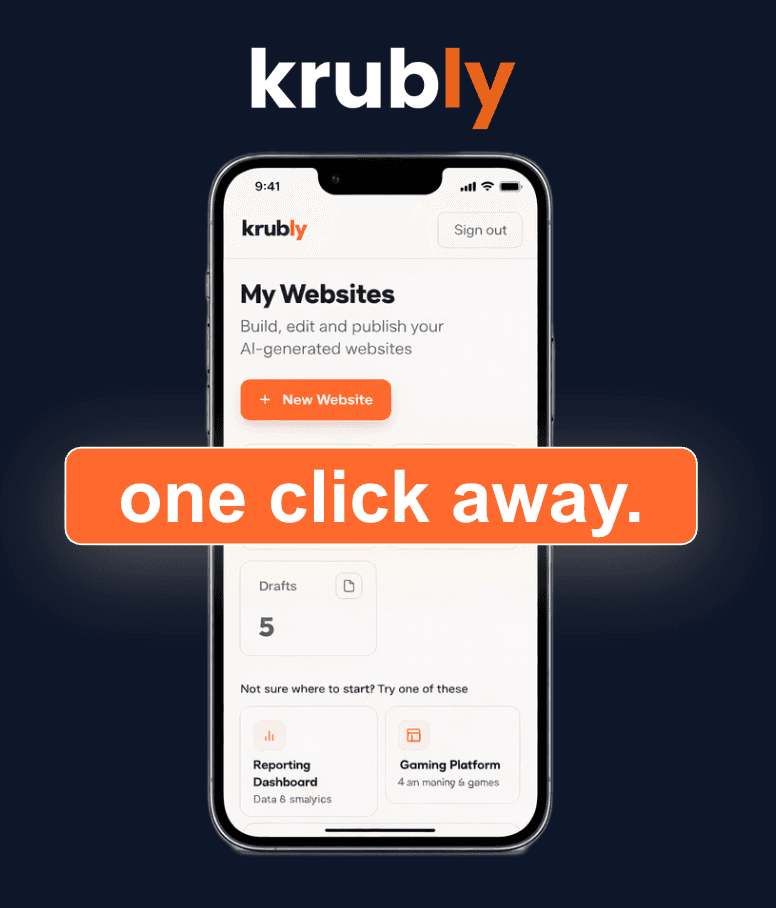
Krubly is built specifically for SMEs that need a website, a CRM, and a lead management system — without the complexity or cost of assembling three separate platforms.
You describe your business once. Krubly generates your website, sets up your CRM pipeline, and structures your product or property catalogue automatically. Every lead your website generates goes directly into your pipeline. Your entire digital business operation runs from one dashboard.
For SMEs in Southeast Asia specifically, Krubly is designed around the reality of how those businesses operate — often run by one or two people, often managing everything from a phone, often needing a solution that works immediately rather than after a lengthy implementation.
[See what Krubly covers for SMEs →]
Related: Website Builder with CRM →
Related: Integrated CRM and Website Builder →